Overview
Starting vacations with magic.
In 2017-2018, I led the end-to-end design and delivery of Walt Disney World Resort's Digital Key, architecting a seamless guest experience and shipping a digital-physical product that is both as magical as Disney and as reliable as a key.
After a brief trial at a single resort, Digital Key was rolled out to all Disney World Resorts in 2019 and remains in use today, unlocking millions of hotel doors and delighting millions of guests daily.
My Role
- Design IC: visual design, interaction design, prototyping, guest study design
- Design team leadership
- Project leadership
Team
- Product Design Team: 1–3 Product Designers, UX Researchers, UX Writers
- Executive Leadership
- Product Management
- Engineering
- Resort Operations
- Hardware Vendors
Timeline
- Fall 2017–Spring 2018: Product design and prototype development; hardware installation
- 2018: Pilot launch in one resort
- 2019: Rollout to all resorts
- 2019–present: Digital Key used by 30+ Disney World Resorts
Problems
Resort guests were waiting in front desk check-in lines for up to 20 minutes. The guests had just traveled to Disney World and were ready to start their vacations. They wanted to do anything other than wait.
Resort operators wanted to reduce front desk visits. Digital Key was a cornerstone piece of a larger self-service resort program with the goal of reducing the need for plastic key cards which would reduce guest front desk arrival visits.
Discovery
I led the design team through two discovery activities:
- Competitive Analysis: we reviewed other remote keys in the marketplace. At that time, this meant hotel keys (Hilton had recently launched one) and car keys (Volvo was an informative example).
- Research Review: Disney had previously researched remote room arrival as part of their MagicBand product, so my research partner advised we review that rather than conduct new discovery research.
These activities led to three key discovery findings:
- Leisure travelers were not aware of digital keys: in 2017-2018, remote arrival programs were targeted to business travelers rather than vacationing families.
- Resort arrival is high stress: most guest had traveled more than 8 hours to get to Walt Disney World, then they had to find the front desk, wait in line, then find their room.
- Guests said their vacation started when they opened their hotel room door: this moment marked the end of travel and the start of their vacation.
Goals
Based on our discovery, I set these goals for Digital Key:
- Gain high adoption: our goal was for 50% of eligible guests to use Digital Key to unlock their hotel room door at arrival.
- Be simple and easy to use: be as reliable and intuitive as an actual key.
- Be easy to understand while distracted: provide clear feedback to confirm door and lock status.
- Celebrate the moment: Digital Key was replacing cast interaction at the front desk. It was our role to replace that interaction and deliver the magic guests expected.
Concepting
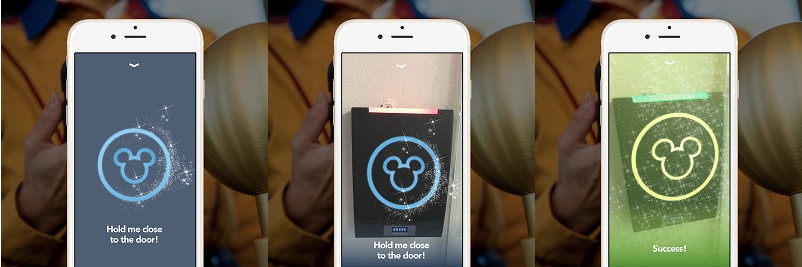
Three states from my Keynote concept prototype.
Our first step was to explore concepts of what Digital Key could be: how it looked, and how it felt to unlock. The design team made multiple scrappy mid-fi prototypes to bring the physical interaction and unlock moment to life.
I designed this early concept prototype by combining photos of my phone and the office door keypad in Keynote. This simple interaction – bring phone near lock, see Mickey shape in phone's viewport, see success animation – informed the direction of our final shipped product.
Testing
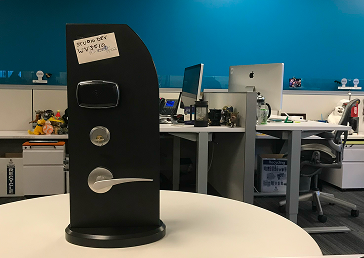
Our beloved Tiny Door, used to test working prototypes of door unlock experiences.
After exploring concepts and settling on a direction, we moved into an iterative testing cycle: the team and I moved into design refinement and prototyping. One of the thing I knew was critical was to have a working prototype that could actually unlock doors to make the experience real to testers and stakeholders. We worked closely with engineers to enable an unlock moment on our tiny door. Shortly after, we shipped working locks to our VP stakeholders in Orlando and Glendale and brought working device prototypes to an executive review. The first VP tapped the phone to the lock, saw and heard the unlock animation, and said “Oh, cool!” Having a nearly real-world experience helped to wow stakeholders.
We also used working prototypes in our user tests. We used test insights to confirm comprehension and discoverability, refine messaging, refine animation speed, validate sound and haptic preferences, test device to lock distance and more. We also based refinements on design leadership and stakeholder feedback.
Customer Experience
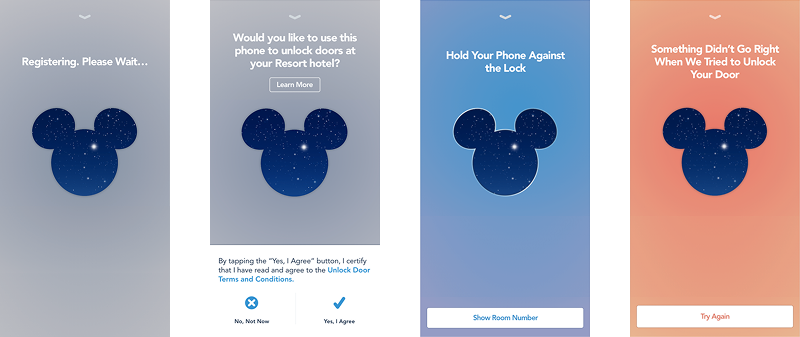
Four states from the high-fidelity Key: registration, opt-in, active, and error.
All of this testing data and stakeholder feedback informed the shipped design. Some of the design decisions at play in the above key screens/states are:
- The stateful colors were selected because the gray, blue, and orange correspond to the Disney design system colors for inactive, active, and error.
- The active key has a glint of animation around the Mickey shape to show guests that the key is active and ready for use.
- The error states were designed to be immediately recognizable and recoverable to ensure the guest clearly understood what had happened, why, and what action they could take.
Service Design

The backend flow, from key registration to activation to unlock.
Designing Digital Key meant more than designing a delightful guest experience: I was also charged with making key set up simple and using the key reliable. To accomplish this, I worked closely with engineering and resort ops to understand the full key service. There are three phases in the key’s workflow:
- Registration: Registration is the process of installing a token on the user’s device that enables it to unlock doors. This process occurs entirely in the background unless an error occurs.
- Activation: The activation step associates the device token with the user’s account. This step also includes a mandated opt-in; after opting in, the user’s device is activated in the background and only surfaced to users if a error occurs.
- Unlock: When users open their key, they’ll see the blue/active state once their key is ready to go. If they encounter an error during unlock, I designed error states that gave clear direction on how to fix the error.
I designed this flow to give the guest the best chance to arrive at their resort room door with a ready-to-use key. For example:
- Registration and activation can take place before the guest’s arrival date, allowing critical steps to be completed long before arrival.
- The resort locks used Bluetooth Low Energy, so the guest device needed to have Bluetooth enabled to use Digital Key. Although Bluetooth wasn’t required until unlock, I recommended we start checking for Bluetooth at activation. This way, guests would notified in advance of the need for Bluetooth and have a direct link to enable it in their device settings.
Outcomes
Digital Key was launched at a single hotel in 2018, and expanded to all resort hotels in 2019. We exceeded our initial adoption goal at launch: we were aiming for 50%, but we achieved 80% adoption among eligible guests.
Our other goal was to delight guests. We confirmed we achieved this too: during an onsite ergonomics test, we watched a series of customers using the key to unlock doors. As they did so, we heard ‘Ooh!’, ‘Yay, magic!’, and ‘That’s just what you would expect from Disney.’ I had achieved the goal of delivering magic to Disney guests
As of 2026, Digital Key is still in use at all Walt Disney World resort hotels.
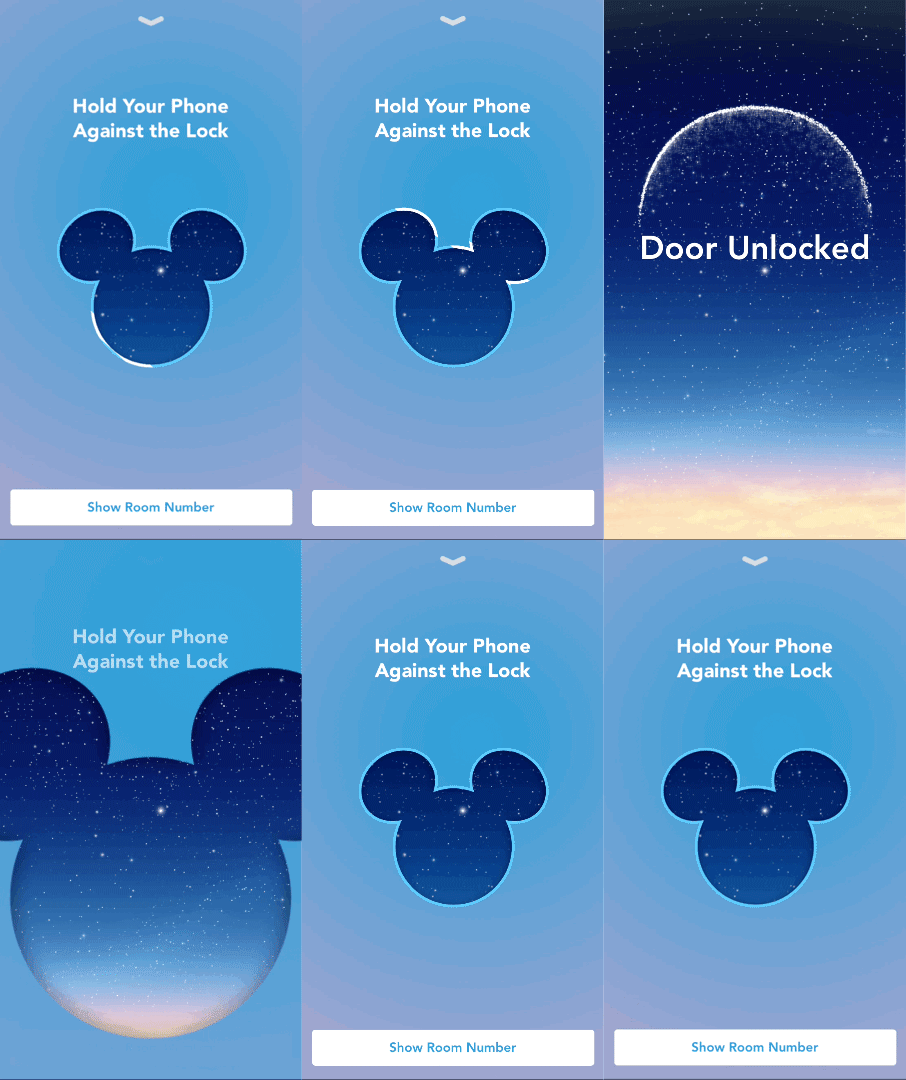
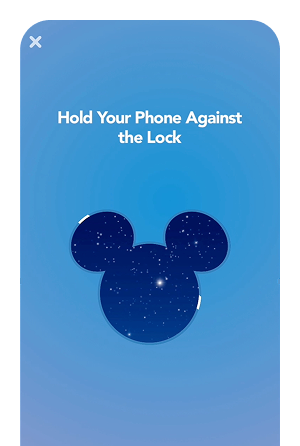
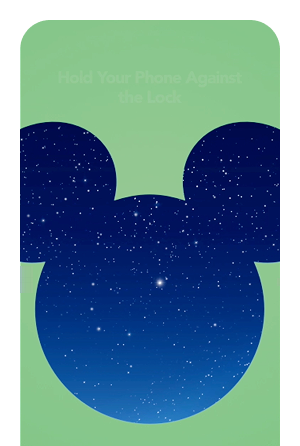
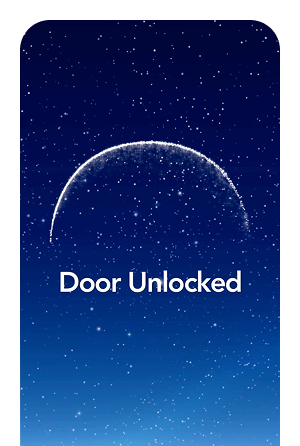
The final Digital Key door unlock animation.